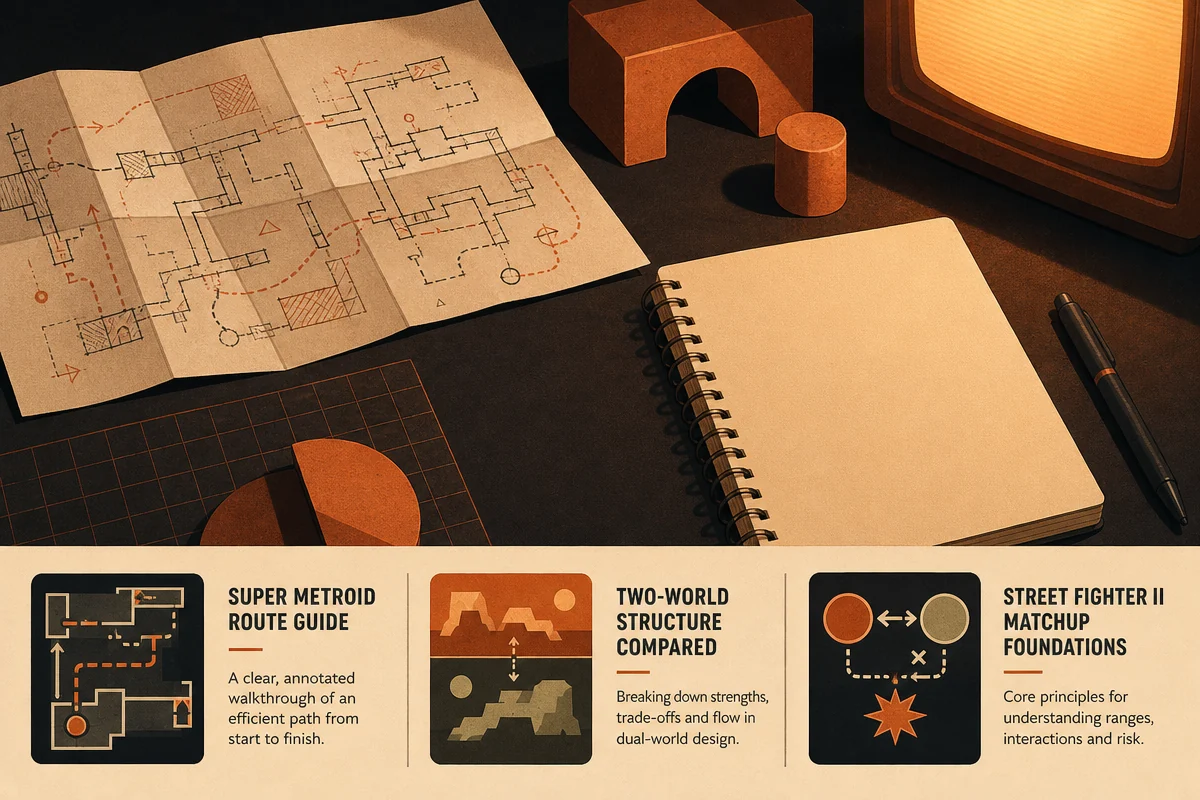
Reading Super Metroid as a Route-Planning Problem
A spoiler-aware route guide to how ability gates, map memory and backtracking turn Super Metroid’s interconnected exploration into a readable planning problem.
Browse all articlesVault Games Brisbane City is an editorial publication for readers who want game guides, strategies, walkthroughs, mechanics comparisons and game-history context without unnecessary jargon. We start with the question behind a difficult route or decision, then make the relevant system easier to understand.
Guides keep any promotional language separate from the game's documented systems so readers can choose how they want to play.
Clear, spoiler-aware game writing.
Explore featured guidesThe featured collection offers three different starting points. Choose a guide about remembering where progress can lead, a comparison about how familiar spaces change, or an explainer about learning an opponent through observation and practice. Meaningful spoilers are identified before late-game locations, major progression turns or other story-sensitive details appear.
A spoiler-aware route guide to how ability gates, map memory and backtracking turn Super Metroid’s interconnected exploration into a readable planning problem.
Browse all articlesVault Games Brisbane City keeps its editorial boundaries visible. The publication focuses on documented game writing, marks meaningful spoilers before revealing sensitive details, and uses original illustrative imagery rather than official artwork or exact canonical screenshots.
Articles identify meaningful spoilers before revealing late-game locations, major progression turns, endings or other story-sensitive information, so readers can choose how far to continue.
The publication covers guides, strategies, walkthroughs, mechanics comparisons and game-history context. Factual description is kept distinct from an editorial view or one useful approach.
Publication imagery is original and editorially illustrative. It is not official artwork, an exact canonical screenshot or evidence of affiliation with a rights holder; articles are published by the Vault Games Brisbane City editorial team.
Start with the part of play you want to understand more clearly. The guide collection moves between route planning, changing spaces, matchup practice and the wider history around established games. Each entry offers a different way into the same editorial promise: useful detail without unnecessary jargon.
Use the Super Metroid route guide when the question is how ability gates, map memory and backtracking work together. It treats interconnected exploration as a route-planning problem, giving you a clearer way to read why a return trip may matter.
Browse all articlesThese images are editorial illustrations rather than official artwork or exact canonical screenshots. Each one isolates a practical idea from the featured corpus, with spoiler-sensitive material kept outside the frame.
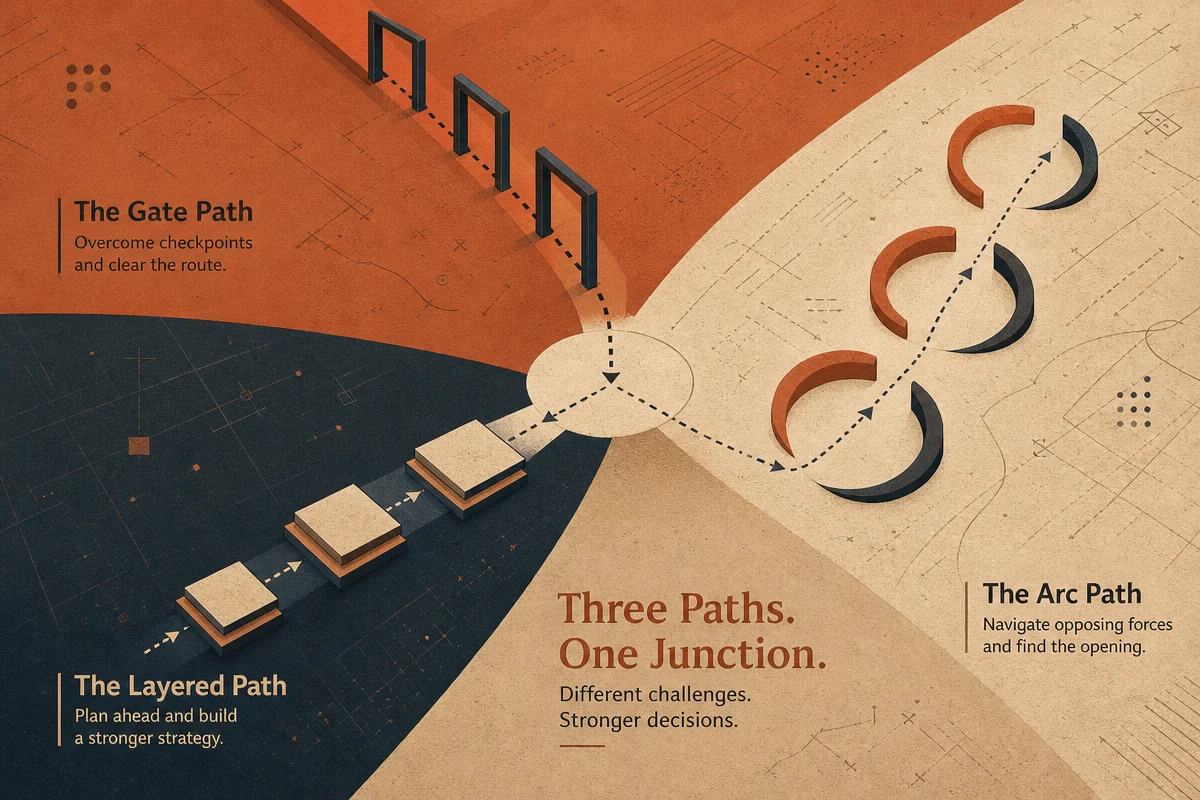 Route memory
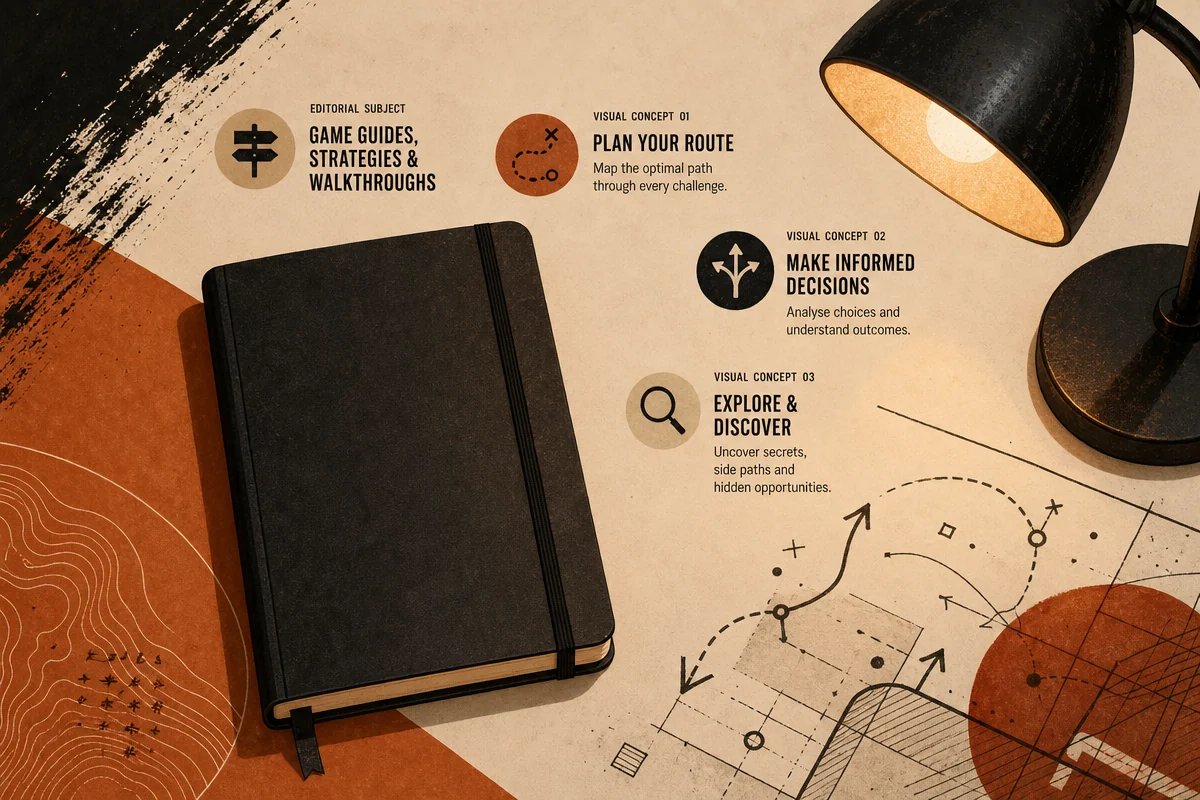 A space in two forms
 Learning the exchange
The three featured approaches are not interchangeable. One asks you to remember where a new ability may open a route, one asks you to recognise how a familiar space has changed, and one asks you to learn an exchange through repetition and adjustment.
Street Fighter II frames learning through selectable fighters, round-based matches, special moves, spacing and matchup-focused play. The guide’s practical question is what changed between exchanges, so practice can become deliberate adaptation rather than repetition alone.
Super Metroid links ability gates, interconnected exploration, map memory and backtracking. A useful reading strategy is to track what a new ability changes about possible movement rather than treating every blocked passage as a dead end.
The Legend of Zelda: A Link to the Past places its overworld and dungeons across two connected worlds. The comparison is most useful when your decision is whether a familiar area should be read as a new route, a puzzle setting or a travel problem.
The featured subjects come from two connected parts of early-1990s game culture: Super Nintendo exploration and arcade fighting. Their release-era settings help explain why their design questions feel different before the editorial team adds any preference or route advice.
Super Metroid, released in 1994 for the Super Nintendo Entertainment System, builds its identity around interconnected exploration, ability-gated routes and map-led progression. Editorial view: its release-era context makes the map feel less like a record of places visited and more like a prompt for remembering where a new ability may matter.
Browse the archiveA useful guide should make its scope visible before it asks you to follow a route or accept an interpretation. These short notes explain how the Vault Games Brisbane City editorial team handles spoilers, imagery, recommendations and publication identity.
Meaningful spoilers are identified before late-game locations, major progression turns, endings or other story-sensitive details appear. The scope note comes first, so readers can decide how far they want to continue.
AuthorAsk about a featured game, a guide route, a mechanics comparison or the history behind a design decision. Include your spoiler preference so the editorial team can understand how much detail belongs in the reply.